LADTH
Landings held
Some destination codes relate to catches that are retained for a period prior to final landing. Final landings do not necessarily distinguish whether fish have previously been recorded against a “non-terminal” landing destination code. To avoid double counting, these non-terminal landings are dropped from the landings data. These catches should be landed on a subsequent trip and, whilst that will inflate the catch-per-unit-effort of the subsequent trip, the overall impact should be close to neutral.
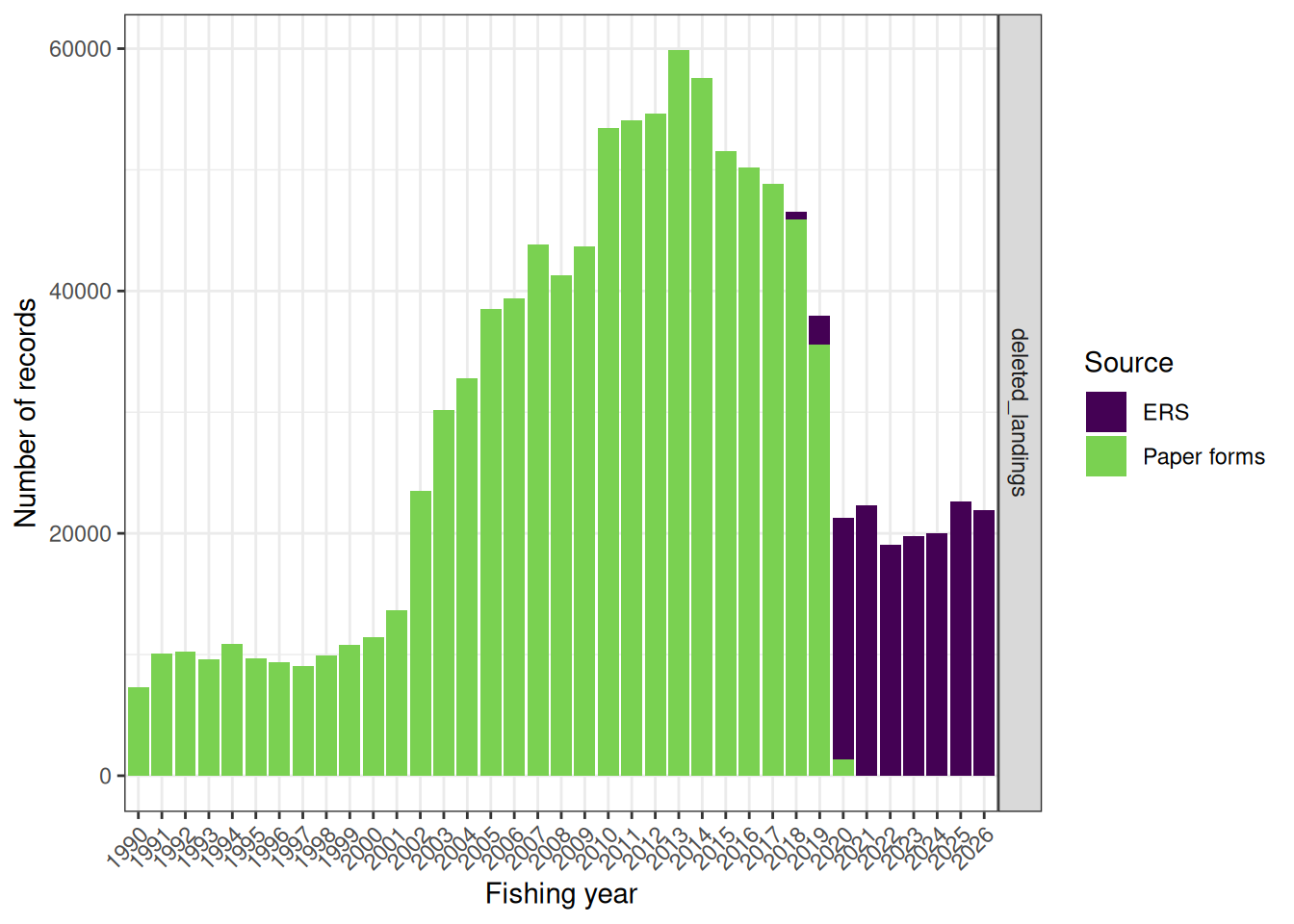
The Electronic Reporting regime introduced new destination codes, and these are updated periodically via Circulars. A record of these codes is kept in the destination_type table. The dropped non-terminal landings are moved to the deleted_landings table.
-- © Copyright 2026 The Kahawai Collective
-- SPDX-License-Identifier: MIT
INSERT INTO grooming_rules
VALUES ('LADTH', 'edw', 'landings', 'Drop', 'Retained (non-final) landings');

CREATE OR REPLACE FUNCTION LADTH() RETURNS VOID AS $$

INSERT INTO groomed.checks(code, "table", "column", id)
SELECT 'LADTH', 'landings', 'destination_type', id
FROM   groomed.landings
WHERE destination_type IN (SELECT code FROM public.destination_type WHERE NOT considered_final);

UPDATE groomed.landings
SET    checks=array_append(checks, 'LADTH'), dropped=TRUE
WHERE  id IN (SELECT id FROM groomed.checks WHERE code = 'LADTH');

$$ LANGUAGE SQL;

SELECT LADTH();
Effects of grooming